Blogs and Updates
- Home
- /
- Blogs and Updates
- /
- Why Every Product Business Needs a GS1 Barcode Before Selling on Amazon/Flipkart
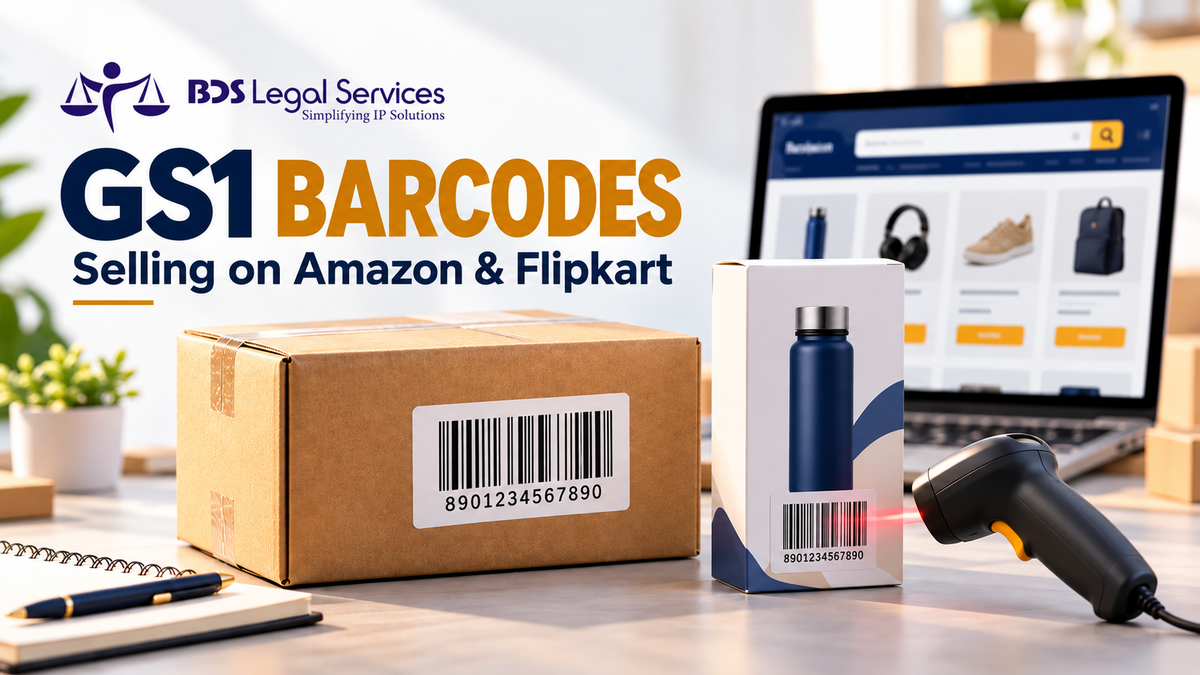
Selling products online has become easier than ever. Platforms like Amazon and Flipkart allow businesses to reach customers across India without opening physical stores.
But before listing your products online, there is one important thing many businesses need to understand product barcodes.
A GS1 barcode gives your product a unique identity and can help businesses manage product listings, inventory and retail distribution.
What Is a GS1 Barcode?
A GS1 barcode is a unique product identification number used to identify a specific product. In India, GS1 India is the authorised organisation that issues GS1 barcodes. GS1 barcodes are used across retail and supply chains in India and internationally.
For example, if you sell a shampoo in 100 ml and 200 ml sizes, each product variant may need its own product identifier.
This helps marketplaces and other businesses identify the correct product.
Why Is a Barcode Important for Online Selling?
When you create a new product listing on Amazon, a product ID such as a GTIN, UPC or EAN may be required. Amazon states that a barcode such as UPC/EAN is required for creating a new ASIN, although eligible products can apply for a GTIN exemption.
A valid product identifier can help you:
● Create product listings
● Identify individual products and variants
● Manage inventory
● Match products with existing marketplace listings
● Support retail and distribution operations
● Prepare your products for selling through different channels
GS1 India also explains that GS1 barcodes provide a standardized product identity that can be used across online and offline marketplaces.
Is GS1 Barcode Required for Amazon?
For a new product listing, Amazon generally requires a product ID such as a GTIN, UPC or EAN. If you do not have a barcode, Amazon provides a GTIN exemption process for eligible products.
So, having a valid barcode can make the product listing process more straightforward.
However, a barcode is not required in every situation. For example, eligible private-label, handmade, generic or other products without barcodes may qualify for a GTIN exemption, depending on Amazon's requirements.
What About Flipkart?
Marketplaces can have their own product identification and listing requirements. If you plan to sell through multiple marketplaces, having a standard product identifier can be useful for maintaining consistent product information and inventory records.
Instead of treating your barcode as something required only for one marketplace, it is better to plan product identification properly from the beginning.
Why Should You Get the Barcode From GS1 India?
Businesses should be careful when buying barcodes from unknown third-party websites.
GS1 India states that it is the only organisation authorised to issue GS1 barcodes beginning with 890 in India. It also warns businesses about unauthorised barcode sellers.
Using an authorised GS1 barcode helps ensure that your product identification follows recognised GS1 standards.
One Barcode for Every Product?
Not necessarily.
Different products or product variations may require different GTINs.
For example:
● Face Wash – 50 ml
● Face Wash – 100 ml
● Face Wash – 200 ml
● Face Wash – Pack of 2
These can be different trade items and may therefore require separate product identifiers.
This is why businesses should estimate their current and future SKU requirements before registering for barcodes. GS1 India specifically advises businesses to consider both current and future product requirements.
How Does GS1 Barcode Registration Work?
The general process includes:
Step 1: Understand Your Product Requirements
Prepare a list of your products and product variants.
Step 2: Register With GS1 India
Submit the required business information and documents to GS1 India.
Step 3: Select the Required Barcode Capacity
Choose the barcode capacity based on the number of products and variants you expect to have.
Step 4: Complete the Registration Process
Pay the applicable registration, subscription and other charges.
Step 5: Receive Your Barcode Allocation
After the registration process, GS1 India provides the required barcode allocation and company prefix.
GS1 India currently states that the registration process usually takes around 7–10 working days after the required form, documents and payment have been submitted.
What Happens After You Get the Barcode?
Getting the barcode number is only the first step.
You should properly map each barcode to the correct:
● Product name
● Product variant
● Size
● Packaging
● SKU
● Product information
● Marketplace listing
Keeping accurate records can help prevent mistakes when adding products to different sales channels.
Can You Sell on Amazon Without a GS1 Barcode?
In some cases, yes.
Amazon provides a GTIN Exemption process for eligible products that do not have a barcode. Examples can include certain private-label, handmade, generic or bundled products.
However, businesses planning long-term product distribution should understand their product identification requirements before choosing between a GS1 barcode and an exemption.
Common Barcode Mistakes Businesses Should Avoid
1. Buying a Barcode From an Unauthorized Seller
Do not assume that every barcode available online is a valid GS1 barcode.
2. Using the Same Barcode for Different Products
Each distinct trade item should be correctly identified according to GS1 standards.
3. Not Planning for Future Products
If you expect to launch many products or variants, consider your future barcode requirements before registering.
4. Entering Incorrect Product Information
The barcode should be correctly mapped to the product and its relevant details.
5. Ignoring Barcode Quality
A barcode also needs to be printed and placed properly so that scanners can read it. GS1 India provides barcode verification services to check factors affecting barcode scanning and performance.
Benefits of Getting a GS1 Barcode
A properly registered GS1 barcode can help businesses:
● Give each product a unique identity
● Manage different SKUs and variants
● Support online marketplace listings
● Improve inventory management
● Prepare for retail distribution
● Support domestic and international sales
● Maintain standardized product information
GS1 India states that its barcodes are designed for interoperability across supply chains and are accepted in domestic and international markets.
Final Thoughts
If you are planning to sell your products on Amazon, Flipkart or other marketplaces, product identification should be part of your business planning.
A GS1 barcode can give your product a standardized identity and support your business as you expand from online selling to retail and other distribution channels.
Before registering, businesses should understand their product variants, future SKU requirements and marketplace requirements.
Need help with GS1 Barcode Registration in India?
BDS Legal Services can help businesses understand the barcode registration process and required documentation.
Contact BDS Legal Services to get professional assistance with GS1 Barcode Registration.