Blogs and Updates
- Home
- /
- Blogs and Updates
- /
- AI-Generated Content and Copyright – Who Owns It Under Indian Law?
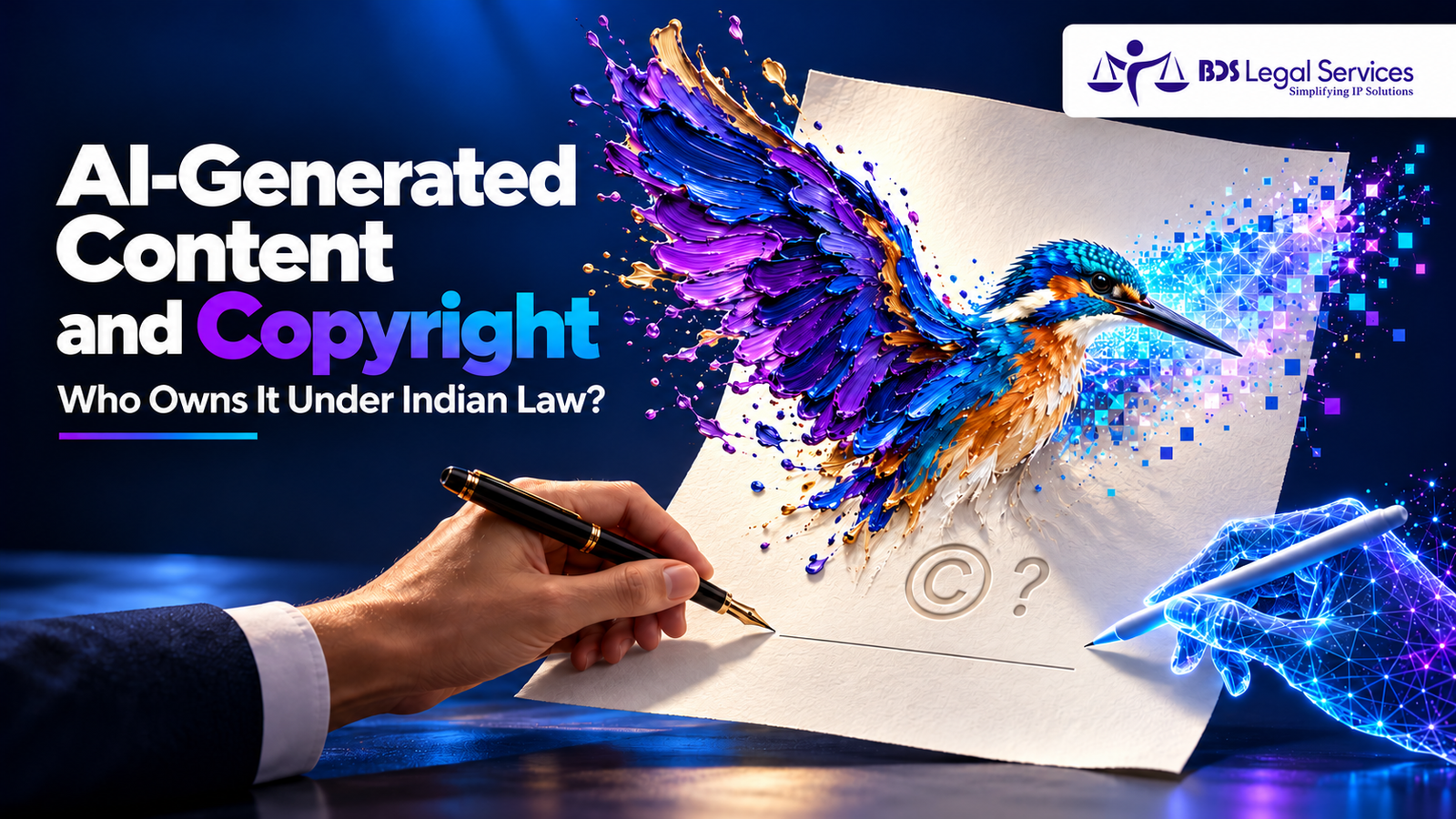
Artificial Intelligence (AI) is now being used to create blog articles, images, videos, music, advertisements, designs, and other types of content.
This has created an important question for businesses, creators, and individuals:
Who owns the copyright in AI-generated content in India?
The answer is not always straightforward. It depends on how the content was created, the level of human involvement, and the type of work involved.
India does not currently have a separate copyright law specifically for AI-generated content. The existing copyright framework applies to AI-related works.
What Is Copyright?
Copyright is a legal right that protects original creative works.
It can apply to works such as:
Articles and blog posts
Books and other written content
Photographs and artwork
Music
Videos and films
Computer programs
Other eligible creative works
Copyright generally protects the expression of an idea, rather than the idea itself.
Can AI-Generated Content Have Copyright in India?
AI-generated content can raise copyright questions, but using AI does not automatically mean that every output will receive copyright protection.
The Copyright Act, 1957 specifically refers to a computer-generated work. Section 2(d)(vi) states that for a computer-generated literary, dramatic, musical, or artistic work, the author is the person who causes the work to be created.
However, the work must still satisfy the requirements for copyright protection, including originality.
Therefore, the question is not simply whether AI was used. It is also important to understand how the AI was used and what role the human played in creating the final work.
Who Owns AI-Generated Content?
The Copyright Act generally states that the author is the first owner of copyright, subject to certain exceptions.
For computer-generated works, the law identifies the person who causes the work to be created as the author.
In an AI-related situation, this can make questions about the human user's role important.
For example, consider these situations:
A person uses AI to generate an image from a simple instruction.
A designer uses AI to create several concepts and then significantly edits one of them.
A company uses AI as part of its content creation process.
A writer uses AI to generate an initial draft and then substantially rewrites and edits it.
These situations may raise different questions about authorship and ownership.
Does Giving a Prompt Make You the Copyright Owner?
Not necessarily.
Simply entering a prompt into an AI tool does not automatically guarantee copyright protection over the resulting output.
The level of human involvement can be important when considering whether the resulting work qualifies for protection.
For example, a person may use AI to generate an initial image and then make substantial creative changes, editing, arrangement, or other contributions to create the final work.
The copyright position may therefore depend on the specific facts of the case.
What If a Business Uses AI to Create Content?
Businesses commonly use AI for:
Marketing content
Social media posts
Blog articles
Advertisements
Product images
Presentations
Videos
Graphic designs
Businesses should keep records of how the content was created and who contributed to the final work.
Employment agreements, freelancer agreements, agency agreements, and other contracts can also be important when determining ownership of copyright.
Under Section 17 of the Copyright Act, the first owner is generally the author, but the Act provides specific exceptions, including certain situations involving employment and commissioned works.
Can You Register AI-Generated Content?
Copyright protection in India generally arises automatically when an eligible work is created; registration is not mandatory. However, a copyright registration certificate can serve as evidence in a dispute concerning ownership.
If a business or creator wants to register an AI-assisted work, it is important to accurately describe the work and consider the human contribution involved.
The Copyright Office provides registration facilities for different types of copyright works.
What About AI-Generated Images?
AI image generators can create illustrations, photographs, artwork, logos, and other visual content.
However, using an AI tool does not automatically give the user exclusive copyright over every image generated.
Businesses should also check whether the AI-generated image contains or closely resembles third-party copyrighted material.
It is therefore important to review the output before using it commercially.
What About AI-Generated Blog Content?
AI can be used to create articles, blogs, product descriptions, and other written content.
If a person uses AI to create a draft and then adds substantial original writing, editing, structure, research, and creative input, the final work may involve significant human contribution.
However, businesses should not assume that every AI-generated article automatically receives copyright protection simply because they entered a prompt.
What If AI Uses Someone Else's Copyrighted Work?
Another important issue is the use of existing copyrighted material.
The Government has stated that copyright owners have exclusive rights over uses covered by the Copyright Act and that users of generative AI may need permission for commercial use of protected works when the use is not covered by an applicable exception.
Therefore, businesses should be careful when using AI tools to create commercial content based on existing books, photographs, artwork, music, videos, or other protected material.
How Can Businesses Protect Their AI-Assisted Content?
Businesses using AI as part of their creative process can take some practical steps:
1. Keep Records
Keep records of prompts, drafts, edits, source materials, and the final version where appropriate.
2. Add Human Creativity
Review, edit, modify, and improve AI-generated content instead of relying entirely on raw AI output.
3. Check Third-Party Content
Make sure the final content does not improperly copy or use someone else's copyrighted work.
4. Review AI Tool Terms
Check the terms and conditions of the AI platform being used, particularly for commercial use and ownership of outputs.
5. Use Appropriate Agreements
Businesses should clearly define ownership of AI-assisted content in agreements with employees, freelancers, designers, agencies, and other contributors.
Is There a Separate Copyright Law for AI in India?
At present, India does not have a separate copyright category specifically created for AI-generated works.
The Government has stated that the existing intellectual property framework is considered capable of dealing with AI-generated works and related innovations, and there is currently no separate AI-specific right under the copyright framework.
However, AI technology is developing quickly, and questions around authorship, originality, ownership, and infringement may continue to evolve.
Key Points to Remember
If you are using AI to create content in India, remember:
AI itself is not the copyright owner.
The Copyright Act contains a provision for computer-generated works.
The law identifies the person who causes a computer-generated work to be created as the author.
Copyright protection still depends on the applicable legal requirements.
Simply entering a prompt does not automatically guarantee copyright protection.
Human contribution can be important when assessing the final work.
Businesses should check ownership agreements and AI-tool terms.
Third-party copyrighted content should not be used without appropriate rights or permission.
Final Thoughts
AI has made content creation faster and easier, but it also creates new questions about copyright ownership.
In India, the existing Copyright Act, 1957 provides the legal framework for dealing with computer-generated works. However, the exact copyright position can depend on the type of content, how it was created, the human contribution involved, and the ownership arrangements.
If you are creating or using AI-generated content for business or commercial purposes, it is important to review the ownership and copyright position before using the content extensively.
BDS Legal Services can assist businesses and creators with copyright registration and other intellectual property-related requirements in India.