

-
10 Years
Validity from date of application -
® Symbol Rights
Granted once certified -
Renewable
Indefinitely, in 10-year terms
What is Trademark Certification?
Trademark certification refers to the formal process of officially recognizing and registering a trademark with the relevant trademark office, granting the trademark owner exclusive rights to use the mark. It is a critical part of the trademark registration process and signifies that the trademark has met all the necessary legal requirements and is protected under trademark law.
-
Registration Certificate What It Is: Once a trademark application has successfully passed through examination and opposition (if any), and all issues have been resolved, the Trademark Office issues a Registration Certificate. Purpose: This certificate serves as legal proof that the trademark is officially registered and grants the owner exclusive rights to use the mark in connection with the specified goods or services.
-
Rights Granted Exclusive Use: The owner of a registered trademark has the exclusive right to use the mark in commerce and prevent others from using a similar mark for related goods or services. Legal Protection: The registered trademark is protected under trademark law, and the owner can take legal action against any unauthorized use or infringement.
-
Symbol Usage ® Symbol: Once the trademark is certified, the owner is entitled to use the ® symbol next to the trademark, indicating that it is a registered trademark.
-
Validity and Renewal Duration: The trademark registration is valid for 10 years from the date of application. Renewal: To maintain the protection, the trademark must be renewed every 10 years by paying the renewal fee.
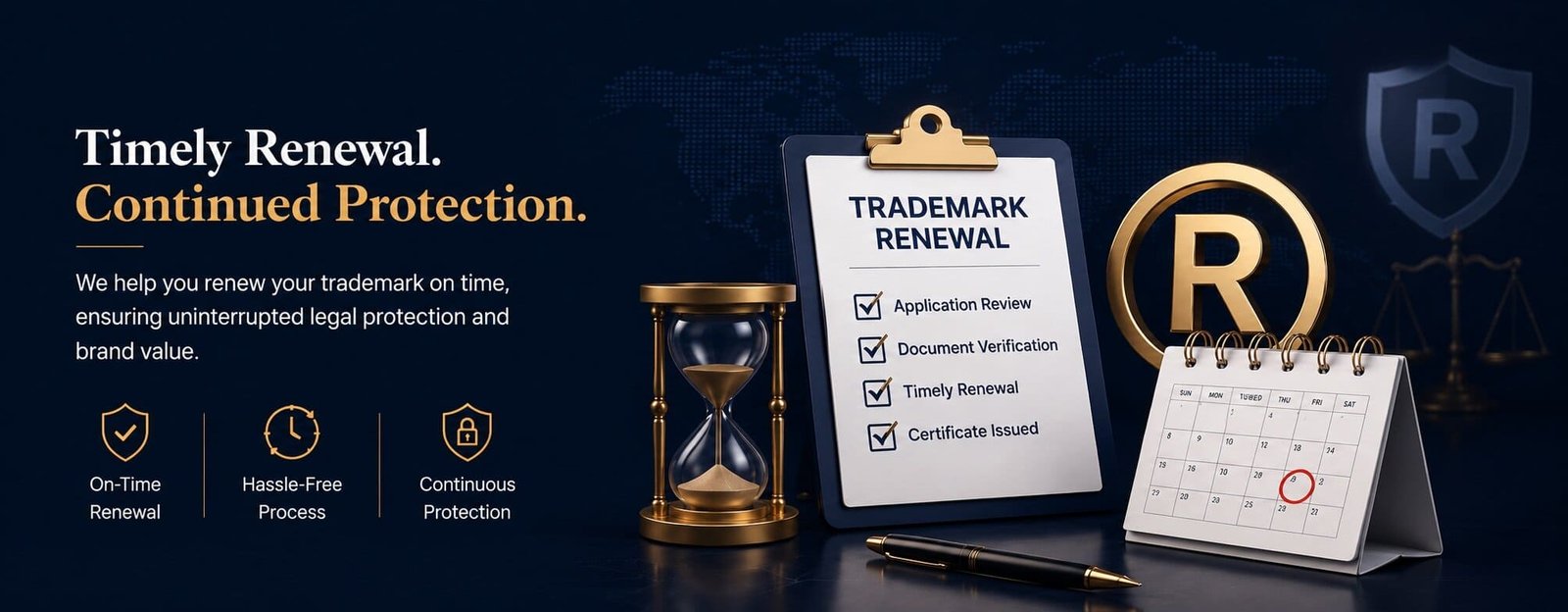
What is Trademark Renewal?
Trademark renewal is the process of extending the protection of a registered trademark beyond its initial registration period. In most jurisdictions, including India, a registered trademark is valid for a specific period, typically 10 years from the date of registration. To ensure continuous protection and maintain exclusive rights to the trademark, the owner must renew the registration periodically.
-
Duration of Protection Initial Term: A trademark registration is valid for 10 years from the date of application. Renewal Term: The trademark can be renewed indefinitely in 10-year increments, as long as the renewal fees are paid and the trademark remains in use.
-
Renewal Process Application for Renewal: The trademark owner must file a renewal application with the relevant trademark office. In India, this is done through the IP India Portal.
-
Documents and Fees Required Documents: Generally, the renewal application does not require any new documents if there have been no changes in the details of the trademark. However, it is important to verify any specific requirements with the trademark office. Renewal Fee: A fee must be paid for the renewal process. The amount varies depending on the jurisdiction and whether the application is filed within the normal period or during the grace period.
-
Impact of Non-Renewal Expiry: If the trademark is not renewed, the registration will expire, and the trademark protection will lapse. Availability: Once expired, the trademark becomes available for registration by others, and the owner may lose exclusive rights to the mark.
-
Renewal Confirmation Renewal Certificate: Upon successful renewal, the trademark office issues a renewal certificate confirming the extension of the trademark’s protection for another 10-year term.
Get Personalized Quote for Trademark Renewal
Fill in your details below and our trademark experts will get in touch with you to guide you through Trademark Certification and Renewal.