
Blogs and Updates
- Home
- /
- Blogs and Updates
- /
- Freelance Developer Built Your App? Here's How to Legally Own the Code, Trademark & More
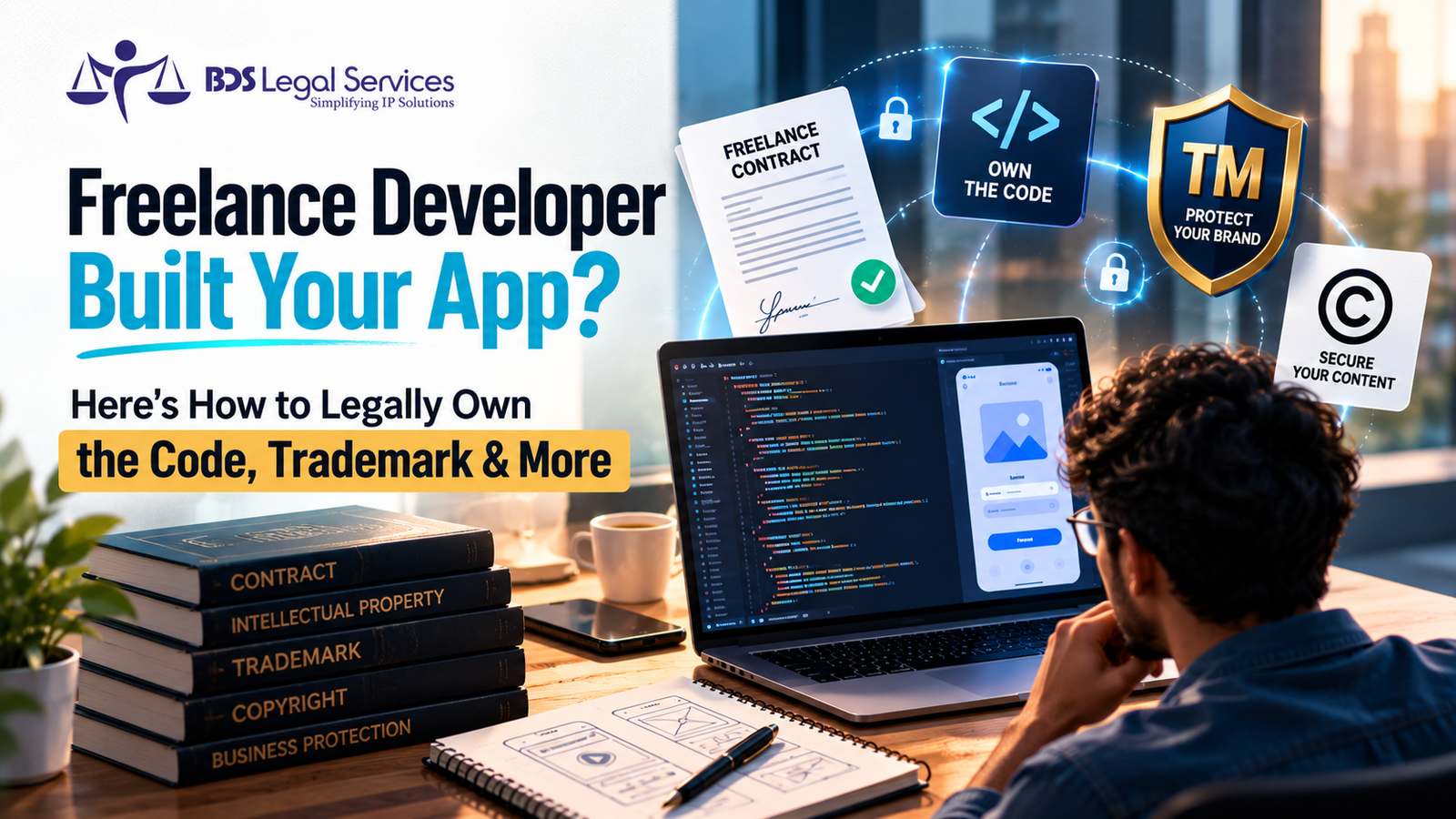
Hiring a freelance developer to build your mobile app, website, or software can be a cost-effective way to turn your business idea into a working product. But there is one important question that many business owners overlook:
If a freelancer developed your app, do you legally own the code?
The answer is not always straightforward.
Paying a developer for creating an app does not automatically mean that every intellectual property (IP) right connected with the app has been properly transferred to your business. Copyright in the source code, ownership of the app name and logo, access to third-party accounts, design files, databases, and other digital assets should be clearly addressed.
If you are launching an app as a business, it is important to protect these assets from the beginning.
Does Paying a Freelancer Mean You Own the App Code?
Not necessarily.
Many business owners assume that because they paid a freelancer to develop an application, they automatically become the legal owner of everything created during the project.
However, ownership of intellectual property can depend on the agreement between the business and the developer, the nature of the work, and applicable intellectual property laws.
For software, the source code can generally be protected under copyright law. Therefore, businesses should clearly document who owns the copyright and related rights in the code created for the project.
Why a Freelance Developer Agreement Matters
Before development starts, the business and freelancer should ideally have a written agreement that clearly explains:
What the developer is responsible for creating
Development milestones and deliverables
Payment terms
Ownership of source code
Intellectual property rights
Confidentiality obligations
Use of third-party software
Delivery of source-code files
Access to hosting and development accounts
Post-development support
Most importantly, the agreement should clearly address intellectual property ownership and assignment.
A simple statement such as "the app belongs to the client" may not adequately address every underlying IP right. The agreement should identify the relevant deliverables and the rights being transferred or licensed.
How to Legally Protect Ownership of the Source Code
Source code is one of the most valuable assets of a technology-based business.
To reduce future disputes, businesses should maintain proper documentation showing how the code was created and who has rights over it.
A development agreement can include provisions dealing with the assignment of applicable copyright rights in the code and other custom-developed materials.
The business should also make sure it receives the actual source-code repository or files rather than only receiving a compiled application.
For example, if a freelancer develops your Android or iOS application, you should consider obtaining access to:
Source-code repository
Backend code
Database structure
API documentation
Design files
Deployment credentials
Technical documentation
Build files
Relevant configuration files
You should also know whether any part of the application uses open-source libraries, paid software, APIs, templates, fonts, images, or other third-party materials.
What About Open-Source and Third-Party Code?
An important mistake businesses make is assuming that every line of code inside an application was created exclusively by the freelancer.
Developers commonly use third-party libraries, frameworks, APIs, plugins, SDKs, and open-source components.
These may be subject to separate licence terms.
For example, some open-source licences allow commercial use subject to specific conditions, while others may impose obligations concerning redistribution or modification.
Therefore, before launching an app commercially, businesses should understand:
Which parts were custom-built and which parts come from third parties?
Your development agreement can require the developer to disclose relevant third-party components and applicable licence restrictions.
Can You Trademark Your App Name?
Copyright and trademark protect different things.
The source code may be protected through copyright, while the name and branding of your app can potentially be protected through trademark registration.
Suppose you launch an application called "QuickServe" with a distinctive logo.
Registering the trademark can help establish legal protection for the brand name and/or logo in the relevant classes.
Before investing heavily in branding, businesses should consider conducting a trademark search.
A trademark search can help identify potentially conflicting marks that may create problems during the registration process or later expansion of the business.
What Should You Trademark?
Depending on your business and branding strategy, you may consider protecting:
App name
Business name
Product name
Logo
Tagline or brand identifier
Other distinctive brand elements
The appropriate trademark class depends on the goods or services associated with the mark.
Because classification and registration requirements can vary depending on the business, professional guidance can help identify the relevant classes and documentation.
Don't Forget the App Logo and UI Designs
The source code is not the only asset created during app development.
A project may also include:
Logos
Icons
Graphics
Illustrations
User-interface designs
Website designs
Marketing creatives
Written content
Product photographs
Original animations
Ownership of these materials should also be addressed in your agreement with the developer, designer, agency, or other contractor.
If different people are involved in the project, businesses should maintain separate documentation covering the work delivered by each person.
Who Owns the App Store and Developer Accounts?
Another issue that is often ignored is account ownership.
Imagine that your freelancer creates the application under their personal developer account and your business has no administrative access.
Later, the relationship ends.
You may then face difficulties accessing or updating the application.
Where practical, businesses should create important business accounts in the company's own name or under company-controlled credentials.
These may include:
App Store developer account
Google Play developer account
Domain registrar account
Hosting account
Cloud platform account
Git repository
Analytics account
Payment gateway account
Email and business accounts
The developer can be given appropriate access without making the developer the permanent owner of the business's core digital assets.
Protect Confidential Business Information
Your developer may have access to sensitive information such as:
Business plans
Customer information
Product ideas
Pricing information
Technical architecture
API keys
Database information
Login credentials
Marketing strategies
A confidentiality or non-disclosure provision can help establish clear obligations regarding the handling of confidential information.
Businesses should also follow appropriate security practices and avoid sharing unnecessary credentials.
What If the Freelancer Refuses to Give You the Source Code?
This is where having proper documentation becomes extremely important.
If the development agreement clearly states what must be delivered and how intellectual property rights are handled, the business has a stronger contractual basis for addressing disputes.
Without a written agreement, it can become much harder to establish what was promised, what was delivered, and who owns particular rights.
If a dispute has already occurred, businesses should preserve:
Invoices
Payment records
Emails
WhatsApp or other communications
Project proposals
Contracts
Source-code records
Repository history
Design files
Delivery documents
These records may become important when determining the parties' respective rights and obligations.
A Practical IP Checklist for App Owners
Before launching an app developed by a freelancer, review the following:
1. Development Agreement
Have a written agreement covering scope, deliverables, payments, confidentiality, and IP rights.
2. Source Code
Ensure that the agreed source-code files and repositories are delivered to the business.
3. IP Ownership
Clearly document ownership or assignment of applicable intellectual property rights.
4. Third-Party Components
Identify open-source libraries, APIs, SDKs, templates, and other third-party materials.
5. Trademark Search
Search the proposed app and brand names before investing heavily in branding.
6. Trademark Registration
Consider registering the relevant brand name and logo under appropriate classes.
7. Design Assets
Document ownership or licensing of logos, graphics, UI designs, content, and other creative assets.
8. Business Accounts
Keep important hosting, domain, repository, analytics, and app-store accounts under business-controlled ownership.
9. Confidentiality
Protect confidential business and technical information through suitable contractual provisions.
10. Maintain Records
Keep contracts, invoices, communications, source-code records, and other project documentation safely.
Final Thoughts
Building an app with a freelance developer involves much more than getting the application to work.
Your app's source code, brand name, logo, designs, documentation, databases, domain, and digital accounts can all become valuable business assets. Without proper agreements and documentation, ownership and access issues can arise later.
The safest approach is to address intellectual property rights before development begins, rather than trying to resolve ownership disputes after the app has already been launched.
If you are planning to launch an app or already have one developed by a freelancer, consider reviewing your development agreement, intellectual property arrangements, and brand protection strategy.
BDS Legal Services can assist businesses with trademark registration and other intellectual property-related requirements to help protect their valuable business assets.