Blogs and Updates
- Home
- /
- Blogs and Updates
- /
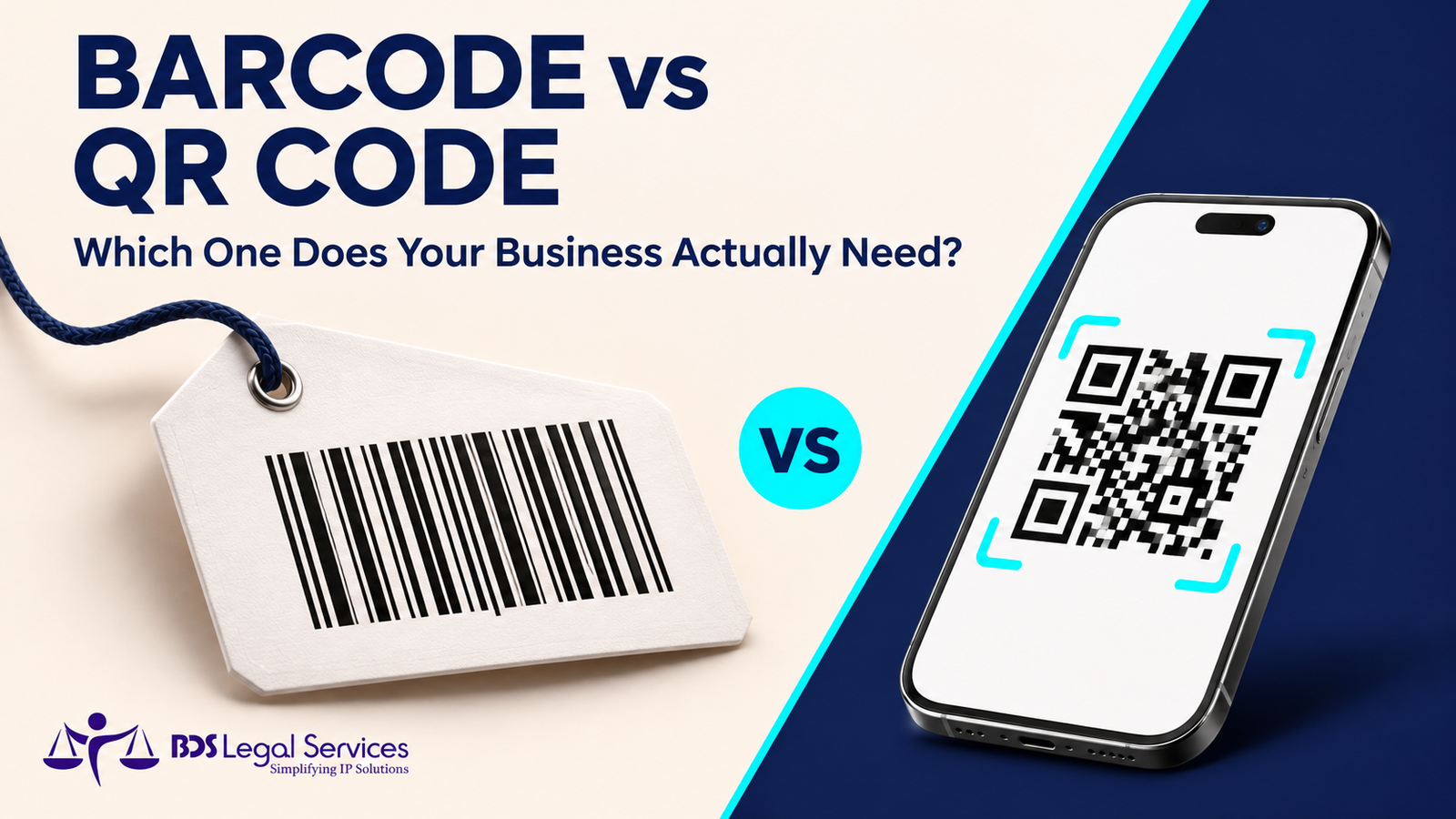
- Barcode vs QR Code – Which One Does Your Business Actually Need?
Barcodes and QR codes are now part of everyday business. You see them on product packaging, invoices, retail shelves, restaurant menus, payment counters, event tickets, and marketing materials.
Although both are used to store and access information, barcodes and QR codes work differently and are designed for different business needs.
If you are launching a new product, managing inventory, selling through retail stores, or simply looking for a quick way to share information with customers, choosing between a barcode and a QR code can make a difference.
This guide explains the difference between barcodes and QR codes, their uses, advantages, limitations, and how to decide which one is suitable for your business.
What Is a Barcode?
A barcode is a visual pattern made up of lines and spaces that represents information in a machine-readable format.
The most common traditional barcodes are 1D (one-dimensional) barcodes. They usually contain a series of vertical lines with different widths and spaces.
Barcodes are widely used for:
Product identification
Retail sales
Inventory management
Warehousing
Shipping and logistics
Stock tracking
Invoice and billing systems
For example, when a product is scanned at a supermarket, the barcode helps the system identify the product and retrieve information such as its product number and price.
What Is a QR Code?
A QR code, or Quick Response Code, is a two-dimensional code that can store more information than a traditional 1D barcode.
QR codes consist of black-and-white or coloured square patterns and can be scanned using a smartphone camera or QR-code scanner.
Businesses commonly use QR codes for:
Website links
Digital menus
Online payments
Product information
Contact details
Social media profiles
Customer feedback forms
Registration forms
Promotional campaigns
For example, a restaurant can place a QR code on a table that opens its digital menu when scanned.
Barcode vs QR Code: What Is the Difference?
The biggest difference is the amount and type of information they can store and how they are scanned.
How Does a Barcode Work?
A barcode represents information using different widths and patterns of lines and spaces.
When a scanner reads the barcode, the pattern is converted into digital information. The system then uses that information to identify the corresponding product or record.
For example:
Product → Barcode → Scanner → Product ID → Business System
A barcode normally does not contain the complete product information such as price, description, or stock quantity. Instead, it acts as an identifier that connects the physical product to information stored in the business's database.
How Does a QR Code Work?
A QR code stores information inside a two-dimensional pattern.
A smartphone or scanner reads the pattern and converts it into the information encoded within it.
Depending on how it is created, a QR code can contain:
A website URL
Text
Phone number
Email address
Contact information
Wi-Fi details
Payment information
Location information
For example:
QR Code → Smartphone Camera → Website/Menu/Payment Page
This makes QR codes particularly useful when a business wants customers to interact directly with digital content.
When Should Your Business Use a Barcode?
A barcode is generally more suitable when your primary requirement is product identification, inventory control, or retail scanning.
1. Selling Products Through Retail Stores
If you manufacture or sell packaged products through supermarkets, retail stores, or other organised channels, product barcodes may be required by your business partners or retail systems.
2. Inventory Management
Businesses with large numbers of products can use barcodes to track:
Stock received
Stock sold
Stock transferred
Stock remaining
Product movement
3. Warehousing
Barcodes can help warehouse teams identify products quickly and reduce manual data entry.
4. Point-of-Sale Systems
Retail businesses can scan product barcodes at checkout and automatically retrieve the product information from their billing system.
5. Shipping and Logistics
Barcodes can be used to identify packages and track items as they move through different stages of the supply chain.
When Should Your Business Use a QR Code?
A QR code is generally more useful when your goal is to share information or encourage customers to take an online action.
1. Digital Menus
Restaurants, cafés, and cloud kitchens can use QR codes to direct customers to digital menus.
2. Website Traffic
A QR code printed on packaging, brochures, posters, or business cards can send customers directly to your website.
3. Payments
Businesses can use payment QR codes to make digital payments easier for customers.
4. Product Information
A QR code on product packaging can take customers to:
Product details
User instructions
Warranty information
Certificates
Videos
Customer support pages
5. Marketing Campaigns
QR codes can be used in advertisements and offline marketing campaigns to connect customers with online content.
6. Customer Feedback
A QR code can direct customers to a review form, feedback form, or survey.
Can a Business Use Both a Barcode and a QR Code?
Yes.
In many cases, using both can be useful because they serve different purposes.
For example, a packaged food product could have:
Barcode: Used by retailers for product identification and checkout.
QR Code: Used by customers to view product information, visit the website, access a digital warranty, or provide feedback.
This approach allows the same product to support both business operations and customer engagement.
Barcode vs QR Code: Which Is Better?
There is no universal answer because the two technologies solve different problems.
If your main goal is inventory, retail scanning, or product identification, a barcode may be more appropriate.
If your main goal is sharing digital information, driving website visits, enabling customer interaction, or connecting offline customers to online content, a QR code may be more appropriate.
For some businesses, the best approach is to use both.
What Barcode Does a Product Need?
If you plan to sell products through retail stores, distributors, marketplaces, or other organised sales channels, you may need a standard product identification number and barcode.
One widely used system is GS1, which provides standards for identifying products and locations across supply chains.
Depending on your business and sales channels, you may need to obtain the appropriate GS1 identification credentials before creating compliant product barcodes.
Businesses should check the requirements of their specific retailer, marketplace, distributor, or industry before selecting a barcode system.
Is a QR Code the Same as a Barcode?
No.
A QR code is technically a type of two-dimensional barcode, but in everyday business usage, “barcode” usually refers to traditional one-dimensional product barcodes.
The key difference is how information is represented and what the code is commonly used for.
A traditional barcode is often used for identification and tracking, while a QR code is commonly used for digital information and interaction.
Advantages of Barcodes
Barcodes offer several benefits to businesses:
Fast product identification
Easier inventory management
Reduced manual data entry
Faster checkout
Better stock tracking
Easy integration with business systems
Widely used in retail and logistics
Advantages of QR Codes
QR codes offer different benefits:
Can store more information
Easy to scan with smartphones
Can connect physical materials to online content
Useful for marketing
Suitable for digital menus
Can simplify customer interactions
Can be used for payments and feedback
Can be printed on packaging and promotional materials
Common Mistakes Businesses Should Avoid
Using a QR Code as a Replacement for a Product Barcode
A QR code may be useful for customer interaction, but it does not automatically replace the product identification requirements of a retailer or marketplace.
Creating a Barcode Without Checking Retail Requirements
Different sales channels may have specific barcode standards and requirements. Always confirm the requirements before printing packaging.
Making QR Codes Too Small
If a QR code is difficult for a smartphone camera to scan, customers may simply ignore it.
Poor Printing Quality
Blurred, distorted, low-contrast, or damaged codes can create scanning problems.
Linking QR Codes to Unreliable Pages
If your QR code points to a website page, make sure the page works properly on mobile devices.
Not Testing Before Printing
Always test your barcode or QR code with the equipment or devices your customers and business partners are likely to use.
Barcode or QR Code: Quick Decision Guide
Choose a barcode if you primarily need:
Product identification
Retail checkout
Inventory tracking
Warehouse management
Supply-chain tracking
Choose a QR code if you primarily need:
Website access
Digital menus
Online payments
Customer feedback
Product information
Marketing campaigns
Digital engagement
Choose both if you need product identification as well as customer-facing digital information.
Frequently Asked Questions
1. Is a QR code better than a barcode?
Neither is automatically better. The right option depends on your business purpose. Barcodes are commonly used for product identification and inventory, while QR codes are commonly used to provide digital information and customer interactions.
2. Can I use a QR code instead of a product barcode?
Not necessarily. If a retailer, distributor, marketplace, or supply-chain system requires a specific product barcode standard, a QR code may not satisfy that requirement.
3. Do QR codes need the internet?
Not always. A QR code can store different types of information. However, if it contains a website URL or online form, the user generally needs internet access to open that online content.
4. Can I put both a barcode and QR code on the same product?
Yes. Businesses can use both when they have different purposes—for example, a barcode for retail scanning and a QR code for customer information.
5. Do QR codes expire?
A static QR code does not normally expire by itself. However, the destination linked to it may become unavailable or change. Dynamic QR codes may also depend on the service used to manage them.
6. Does every product need a barcode?
Not every product necessarily needs a barcode. Requirements depend on how and where the product is sold and the requirements of retailers, distributors, marketplaces, and other business partners.
Final Takeaway
Barcode and QR code are not competing technologies—they solve different business problems.
A barcode is generally useful for product identification, inventory, retail, and logistics, while a QR code is useful for digital information, payments, marketing, and customer engagement.
If you sell physical products, check the barcode requirements of your retailers, distributors, marketplaces, and supply-chain partners before printing your packaging.
If your goal is to connect customers with your website, product information, digital menu, payment page, or feedback form, a QR code may be the more suitable option.
And if you need both operational tracking and customer engagement, using a barcode and QR code together can be a practical solution.
Need Help With Barcode or Business Registrations?
BDS Legal can assist businesses with applicable registration and compliance requirements related to starting and operating their business.
Our team can help you understand the documentation and registration process based on your business activity.
Contact BDS Legal to discuss your business requirements.
📞 1800 890 2172