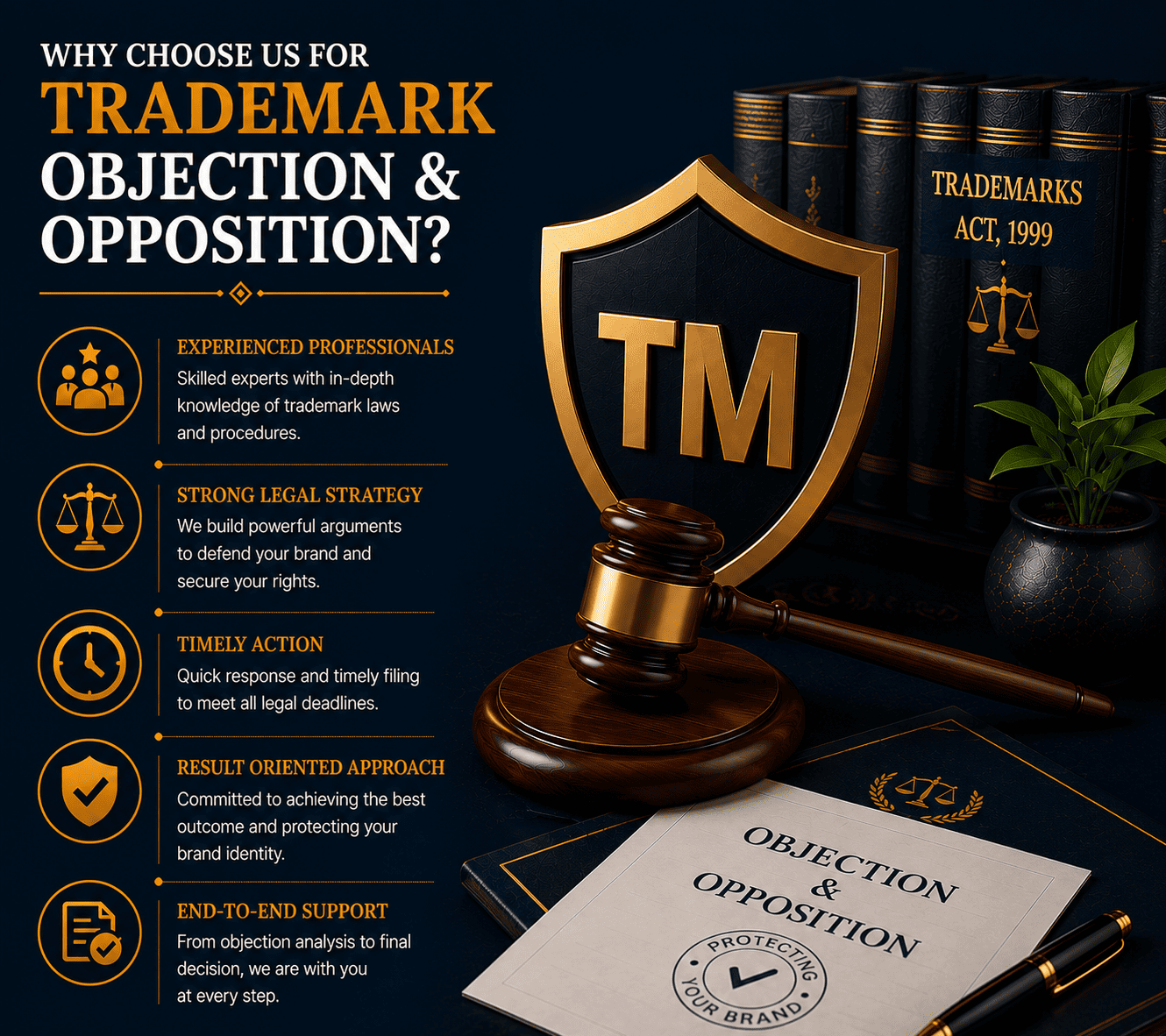
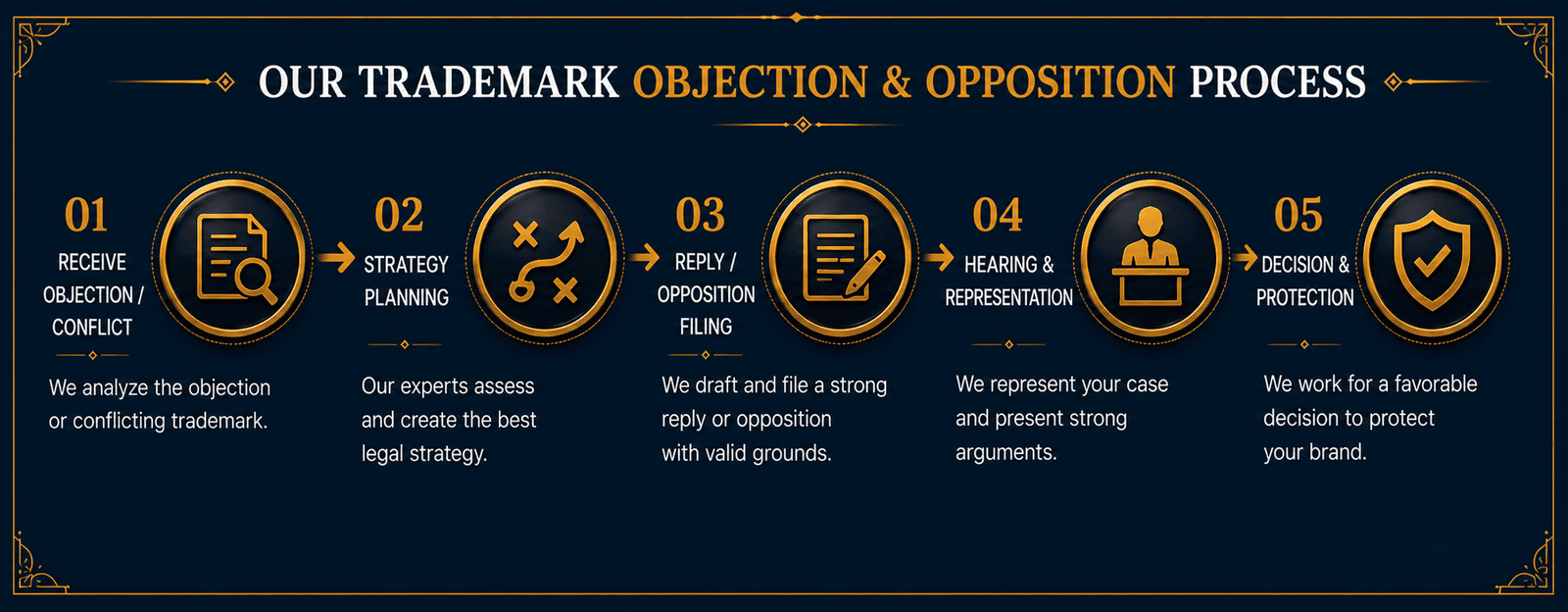
-
30 Days
To respond to an examination objection -
90 Days
Window to file a trademark opposition -
Hearing Officer
Reviews evidence and decides the outcome
What is Trademark Objection?
A trademark objection occurs when the Trademark Registrar raises concerns or issues with a trademark application that may prevent it from being registered. This is typically part of the trademark examination process and is aimed at ensuring that only trademarks that meet legal requirements and do not conflict with existing marks are granted registration.
Reasons for Objection
-
Similarity to Existing Trademarks The proposed trademark may be similar to a previously registered mark or an earlier application, which could cause confusion among consumers.
-
Descriptiveness The trademark may be deemed too descriptive of the goods or services, lacking distinctiveness.
-
Generic Nature The mark may be considered too generic or common to be associated exclusively with a particular source.
-
Non-Compliance The trademark may not meet the legal requirements or standards set by trademark laws, such as being non-distinctive or deceptive.
Examination Report & Response to Objection
-
Examination Report The Registrar issues an Examination Report outlining the objections and reasons. This report is usually provided within a few months of filing the application.
-
Timeframe The applicant typically has 30 days to respond to the objections raised in the Examination Report.
-
Response The applicant must submit a detailed response addressing the objections. This may include arguments, amendments to the trademark, or additional evidence to support the registration.
Possible Outcomes & Hearing
-
Resolution If the Registrar finds the response satisfactory, the application may proceed to publication in the Trademark Journal.
-
Further Objections If the response does not address the concerns, the Registrar may issue additional objections or request a hearing.
-
Hearing If objections persist, a hearing before a Trademark Hearing Officer may be scheduled where both the applicant and the objecting party can present their cases.
What is Trademark Opposition?
Trademark opposition is a formal process in which a third party challenges the registration of a trademark that is being processed by the Trademark Office. This process allows individuals or entities to contest the registration of a trademark if they believe it infringes on their existing rights or could cause confusion in the marketplace.
Grounds for Opposition
-
Likelihood of Confusion The opposing party may argue that the trademark is too similar to their existing mark, potentially leading to consumer confusion.
-
Descriptiveness The opposing party may claim that the trademark is merely descriptive and lacks distinctiveness.
-
Generic Terms The mark may be argued to be generic or common, and thus not eligible for exclusive rights.
-
Prior Rights The opposing party may have prior rights in a similar mark that could be harmed by the new registration.
Opposition Procedure
-
Filing an Opposition The opposition must be filed within 90 days of the publication of the trademark in the Trademark Journal. The opposition can be extended by an additional 30 days if requested.
-
Notice of Opposition The opposing party submits a formal notice outlining their objections and the grounds for opposition.
-
Response The applicant has two months to respond to the notice of opposition with a counter-statement.
Opposition Proceedings, Outcome & Appeal
-
Evidence Submission Both parties submit evidence and documents to support their claims. This may include legal arguments, proof of use, and prior registration details.
-
Hearing If the opposition is contested, a hearing may be held before a Trademark Hearing Officer. Both parties present their cases, and the officer evaluates the evidence and arguments.
-
Decision Based on the hearing and evidence, the Hearing Officer will decide whether to accept or reject the opposition. If the opposition is upheld, the trademark application will be refused. If the opposition is dismissed, the application proceeds to registration.
-
Further Action Both parties have the right to appeal the decision if they are dissatisfied with the outcome.
Get Personalized Quote for Trademark Objection & Opposition
Fill in your details below and our trademark experts will get in touch with you to guide you through responding to a Trademark Objection or Opposition.