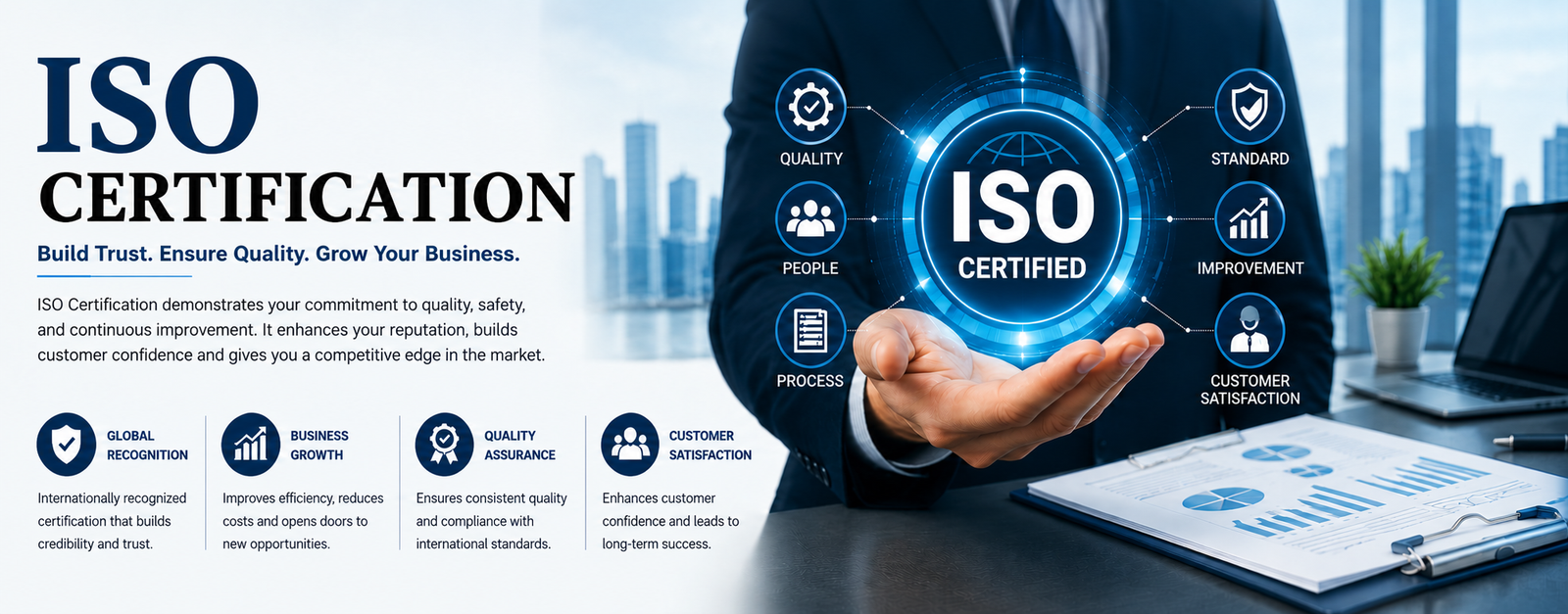
-
3 Years Validity
Before a recertification audit is due -
Global Recognition
Accepted across international markets -
Annual Surveillance
Yearly audits keep certification active
What Is ISO Certification?
Think of ISO certification as a stamp of approval. It tells the world that your business runs the way it should safely, consistently, and to a set standard that experts around the globe agree on. ISO is short for the International Organization for Standardization, a body that writes these rules for different industries
ISO certification means, an outside expert has checked your work and confirmed you meet a specific standard like ISO 9001 for good quality practices, or ISO 22000 for handling food safely.
Big or small, any business can go for it. BDS Legal helps companies across India get ISO certified the right way, without confusion or delays.
Who Should Get ISO Certified?
Honestly, almost any business can benefit. There's no rule saying only big companies qualify — as long as you can show how your business works on paper, you're eligible. People who usually go for it include.
-
Factories and manufacturers who want steady product quality
-
IT firms and consultants who want to prove their data handling is safe
-
Hospitals and medical device makers needing to meet health standards
-
Food businesses that pack, process, or ship food items
-
Companies that export goods and need global trust
-
Small businesses and startups trying to look credible to bigger clients
If you deal with customers, sell abroad, apply for tenders, or just want your internal work to run more smoothly, ISO certification makes sense for you.
Types of ISO Certificates
Not all businesses need the same certificate. The right standard depends on what you do — a factory, an IT firm, and a food processor each follow a different ISO standard built for their line of work. Here’s a quick breakdown of the ones most Indian businesses apply for and what each one actually covers.
| Standard | What It Covers |
|---|---|
| ISO 9001 | General quality management — fits almost any business |
| ISO 14001 | Environmental practices and sustainability |
| ISO 22000 | Food safety across the supply chain |
| ISO 27001 | Protecting data and information security |
| ISO 45001 | Workplace health and safety |
| ISO 13485 | Quality standards for medical device makers |
| ISO 20000 | IT service management |
| ISO 50001 | Managing and reducing energy use |
Benefits of ISO Certification
-
People Trust You More A certificate shows customers you follow real standards, not just promises.
-
Bigger Deals Become Possible Many government tenders and large companies only work with ISO-certified vendors.
-
Your Work Gets Cleaner The certification process forces you to fix messy processes and cut down errors.
-
Selling Abroad Gets Easier Foreign buyers often ask for ISO certification before signing a deal.
-
You Stand Out If your competitor isn’t certified and you are, that’s an easy win in a client’s eyes.
-
Your Team Works Better Clear rules and steps mean fewer mistakes and less confusion among staff.
-
You Never Stop Improving Regular audits keep pushing your business to do better, year after year.
Process of ISO Certification
-
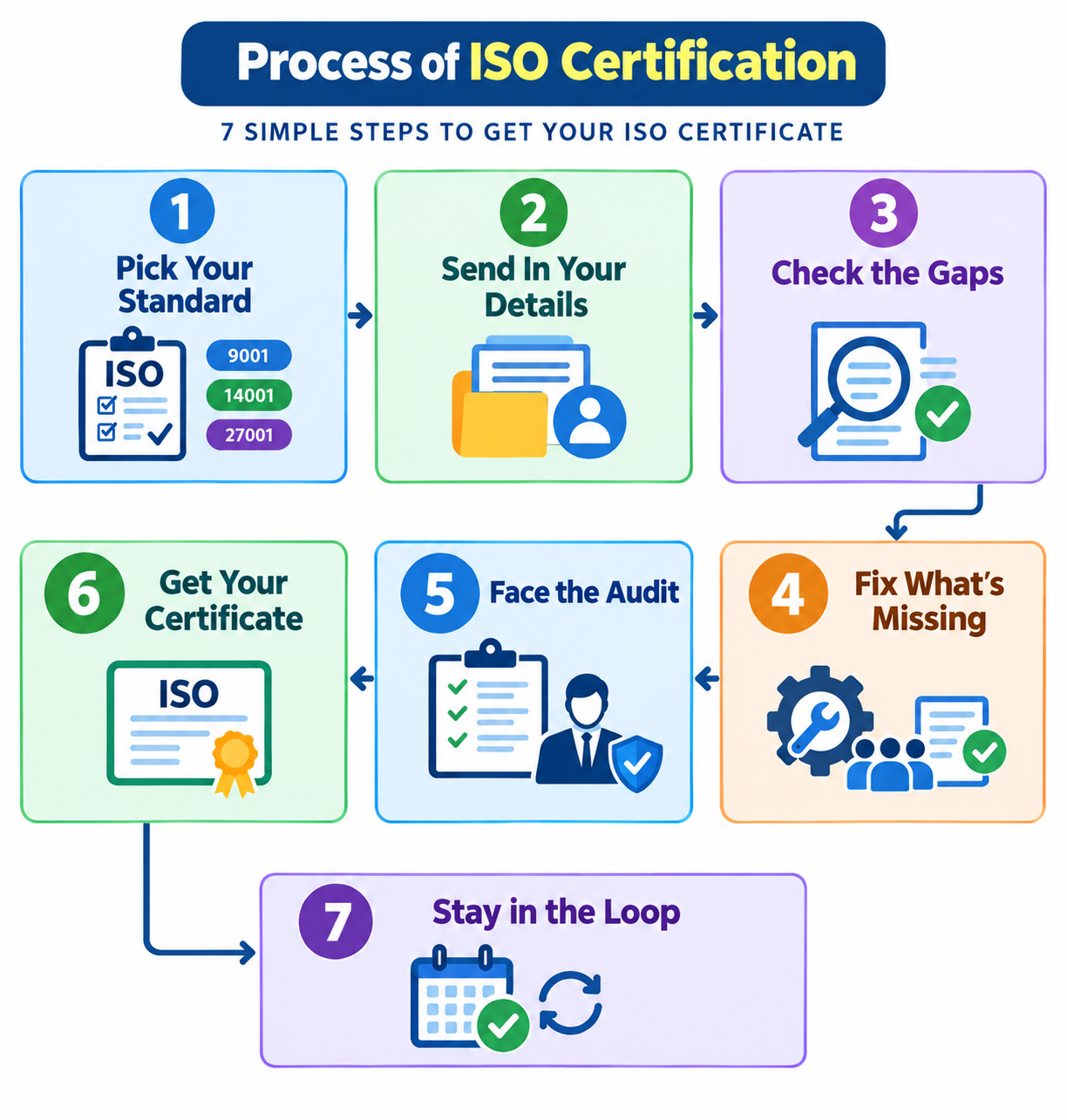
Step 1 : Pick Your Standard Decide which ISO certificate fits your business — 9001 for quality, 14001 for environment, 27001 for data security, and so on.
-
Step 2 : Send In Your Details Share your business documents and get your quality manual ready.
-
Step 3 : Check the Gaps An expert compares your current work against what the standard actually needs.
-
Step 4 : Fix What’s Missing Update your processes, train your team, and tighten up your paperwork.
-
Step 5 : Face the Audit A certified auditor reviews your documents first, then checks your actual work (in person or online).
-
Step 6 : Get Your Certificate Once you pass, you receive your ISO certificate — valid for 3 years.
-
Step 7 : Stay in the Loop Yearly surveillance audits make sure you’re still following the rules.
How Long Is It Valid, and Who Manages It?
Your ISO certificate lasts 3 years. Small yearly checks — called surveillance audits — confirm you’re still on track, and after 3 years you’ll need a fresh audit to renew it.
The actual ISO standards come from the Geneva-based ISO headquarters, but certification in India is carried out through accredited certifying bodies, many recognized by the National Accreditation Board for Certification Bodies (NABCB). BDS Legal works with pan-India clients from our Mumbai (Kanjurmarg West) and Kolkata (Salt Lake) offices to keep this process smooth on both ends.
Documents Required
-
Proof of Business Registration GST certificate, incorporation papers, etc.
-
PAN card and address proof of the company
-
A list of what you sell or offer
-
A simple flow chart of how your business operates
-
Any existing quality documents or standard operating procedures
-
The name of the ISO standard you're applying for
Plans & Pricing
Pricing is not one-size-fits-all — it depends on your business size, the ISO standard you pick, and the certifying body you go with. To keep things simple, BDS Legal offers three easy plans.
Standard
- Everything in Starter plus
- Application Handling
- Certificate Drafting
- Submission — Online & Physical Copies
Advanced
- Everything in Standard plus
- Yearly Surveillance Audits Managed
- Covers the Full 3-Year Certificate Period
Ask us for a quote, and we’ll break down the exact number for you — no confusing charges, no surprises later.
Frequently Asked Questions
Get Personalized Quote for ISO Registration
Fill in your details below and our ISO certification experts will get in touch with you to guide you through ISO Registration.