
Blogs and Updates
- Home
- /
- Blogs and Updates
- /
- Can You Register a Product Design Made with AI in India?
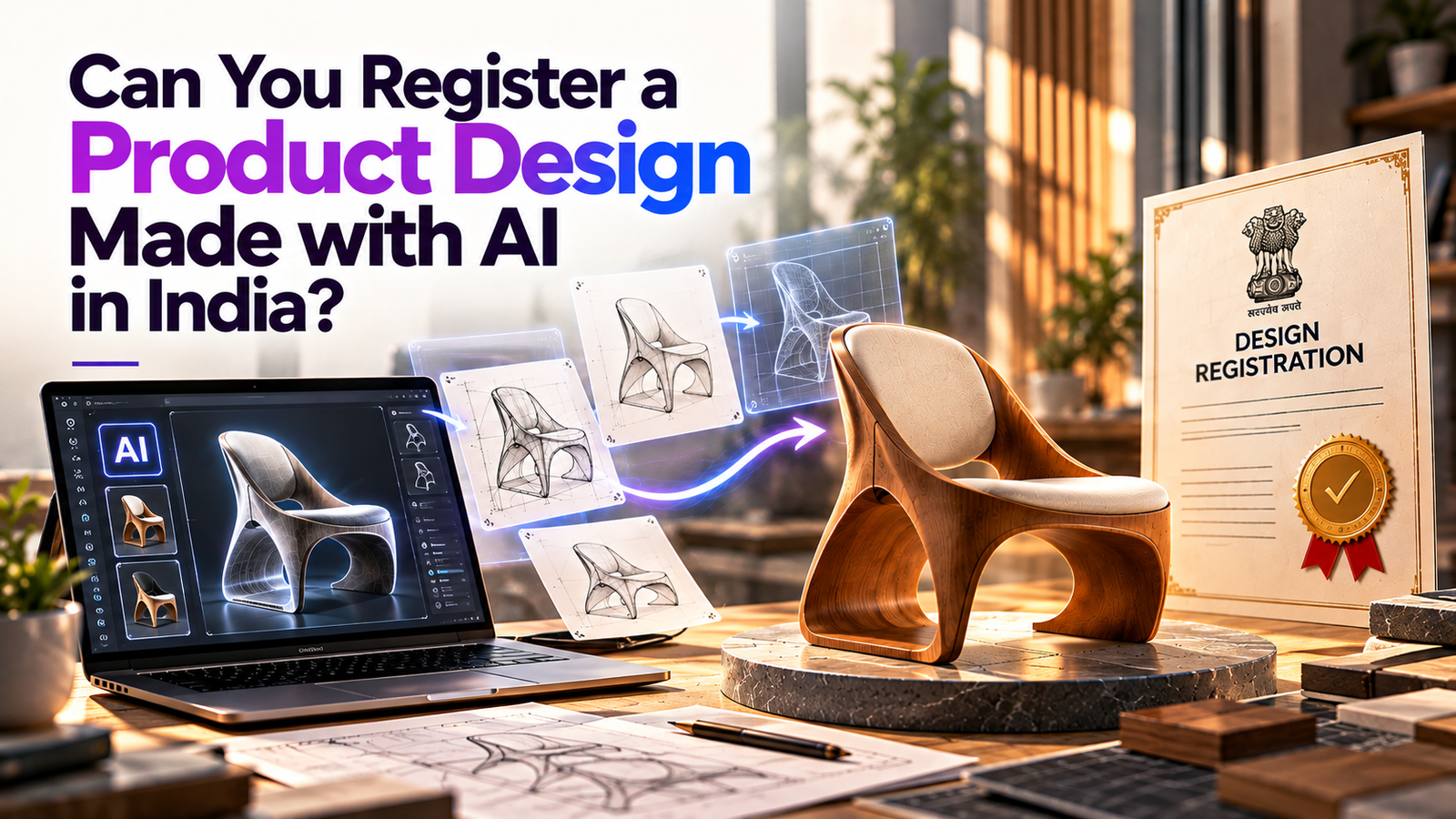
Artificial Intelligence (AI) is now being used to create many types of product designs, such as furniture , packaging, electronic products, accessories, and other products.
This raises an important question: Can a product design created using AI be registered in India?
The answer depends on how the design was created, who owns it, whether it is new, and whether it meets the requirements for design registration in India.
Currently, India does not have a separate registration system only for AI-created designs. AI-related creations are generally considered under the existing intellectual property laws.
For the appearance of a physical product, Design Registration under the Designs Act, 2000 may be an option if the design meets the required conditions.
What Is Product Design Under Indian Law?
A design generally refers to the visual appearance of a product.
It can include things such as:
● Shape
● Configuration
● Pattern
● Ornamentation
● Lines
● Colours
For example, the unique shape or appearance of a chair, bottle, electronic device, or other product may qualify for design protection if it meets the legal requirements.
Can an AI-Generated Product Design Be Registered?
Yes, an AI-assisted product design may potentially be registered if it meets the requirements under Indian design law.
However, AI itself cannot own or register a design. The application must be made by a person or business claiming ownership of the design.
Simply creating a design using an AI tool does not automatically mean that the design can be registered.
The ownership and development of the design should be properly considered before filing an application.
What Requirements Should an AI-Assisted Design Meet?
Before applying for design registration, it is important to check the following:
1. The Design Should Be New or Original
The design should be new or original. A design that is already known or registered may not qualify for registration.
2. Check If the Design Has Been Published
If the design has already been publicly shown, published, or used before filing, it may affect its eligibility for registration.
Therefore, it is better to consider design registration before publicly sharing the design.
3. The Design Should Be Different From Existing Designs
The design should be sufficiently different from designs that already exist.
If it is very similar to an existing design, registration may not be possible.
4. The Design Should Be About the Product's Appearance
Design registration mainly protects the visual appearance of a product.
For example, the shape, pattern, or decorative appearance of a product may be protected.
5. A Design Based Only on Function May Not Qualify
If a feature exists only because it is necessary for the product to work, it may not qualify for design protection.
Design registration is mainly concerned with the visual appearance of the product.
Does Using AI Affect Ownership?
Using AI to create a design does not automatically decide who owns the design.
The ownership may depend on several factors, such as:
● Who created the original product idea?
● Who used and directed the AI tool?
● How much human work was involved?
● Who commissioned the design?
● Who has the right to use the design?
● Are there any agreements between the designer and the business?
For this reason, businesses should properly check ownership before applying for registration.
Can an AI-Generated Product Design Be Copyrighted?
Copyright and design registration are different types of intellectual property protection.
For product designs, design registration may be relevant when the main objective is to protect the visual appearance of a product.
Copyright may apply in different circumstances, but the law also has specific provisions dealing with designs that can be registered under the Designs Act.
Therefore, businesses should identify the right type of intellectual property protection based on the nature and use of their work.
Why Is Design Registration Important?
If a product design qualifies for registration, registration can provide legal protection for that design.
It can be useful for businesses that create products with a unique appearance, such as:
● Furniture
● Electronic products
● Packaging
● Household products
● Fashion accessories
● Consumer products
● Industrial products
Registration can help businesses take action against unauthorized use or copying of a registered design, subject to the applicable law.
How to Register an AI-Assisted Product Design in India
The general process includes the following steps:
Step 1: Identify the Design
First, identify which part of the product's appearance you want to protect.
Step 2: Search Existing Designs
Check whether a similar design has already been registered or publicly disclosed.
Step 3: Check Ownership
Determine who will own the design and review any relevant agreements between the designer, business, or other parties.
Step 4: Prepare the Application
Prepare the required design representations and other information needed for the application.
Step 5: File the Application
Submit the application to the Indian Patent Office in the required manner.
Step 6: Examination
The application will be examined to check whether the design meets the requirements for registration.
If the requirements are satisfied, the design can proceed toward registration.
Do Not Publicly Share the Design Too Early
One important point to remember is when you disclose your design.
If you publicly share, publish, or use a design before filing, it may affect your ability to register it.
Therefore, if you have created a new product design using AI, consider your registration strategy before posting the design online, launching the product, or publicly displaying it.
Conclusion
AI can make it easier to create new product ideas and designs. However, simply creating a design with AI does not automatically make it eligible for registration.
Before applying for design registration in India, businesses should check:
● Whether the design is new or original
● Whether it has already been publicly disclosed
● Whether it is different from existing designs
● Who owns the design
● Whether the design meets the requirements under the Designs Act, 2000
If you have created a product design using AI and want to protect it, it is important to review the design and ownership details before filing.
BDS Legal Services can assist businesses and entrepreneurs with design registration and other intellectual property-related requirements in India.